2006 September
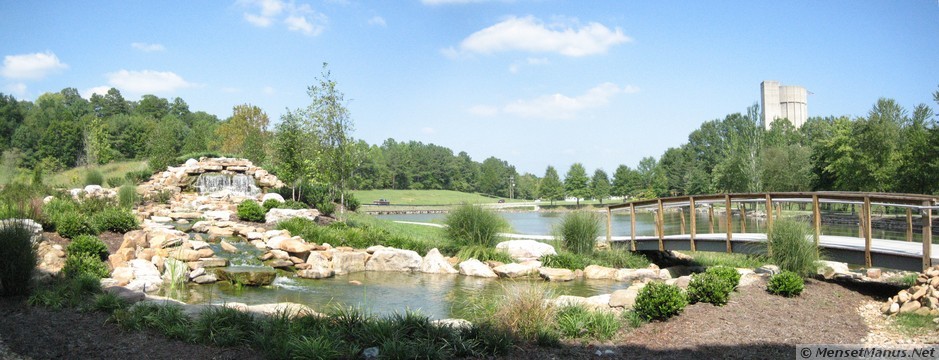
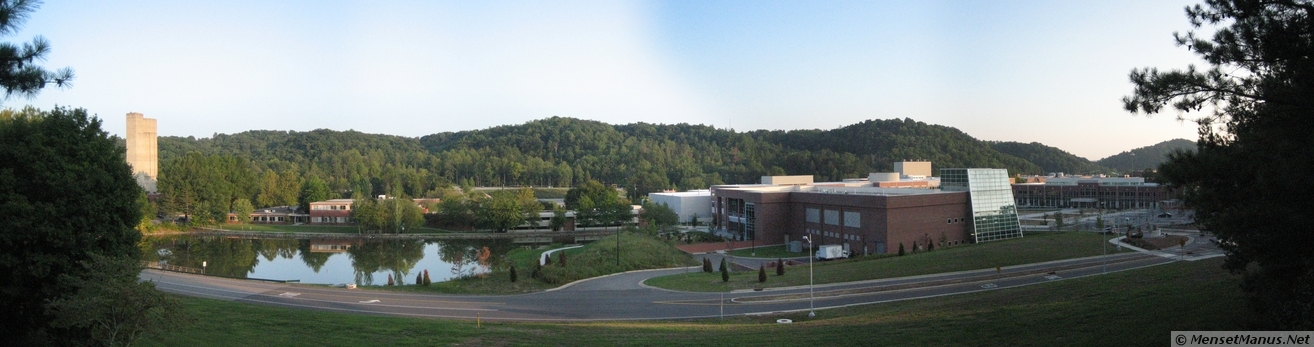
 Sitting
at the patio next to the new cafeteria, looking over the pond, one
can see the old ORNL visitor overlook, up the hill across the street
(out of view in the photo above). Even from that distance,
one can see it has changed significantly since my
last visit.
Sitting
at the patio next to the new cafeteria, looking over the pond, one
can see the old ORNL visitor overlook, up the hill across the street
(out of view in the photo above). Even from that distance,
one can see it has changed significantly since my
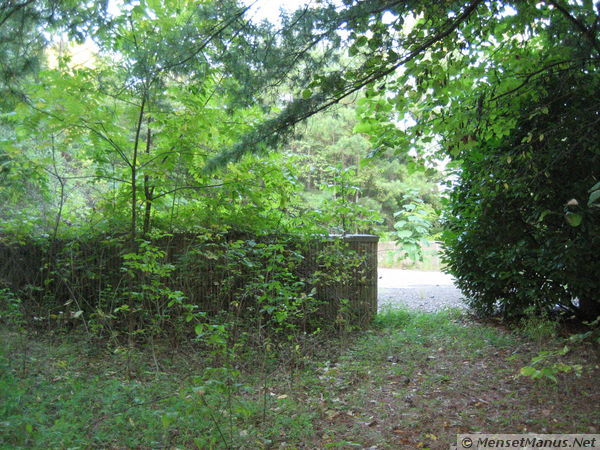
last visit.Little remains of the old nature trail, but a new cut through the trees near the parking lot provides an adequate walking route up the hill.
 Approaching
the overlook, the new (
~2003-2005 archived 2007)
Visitor Center building complex comes into view.
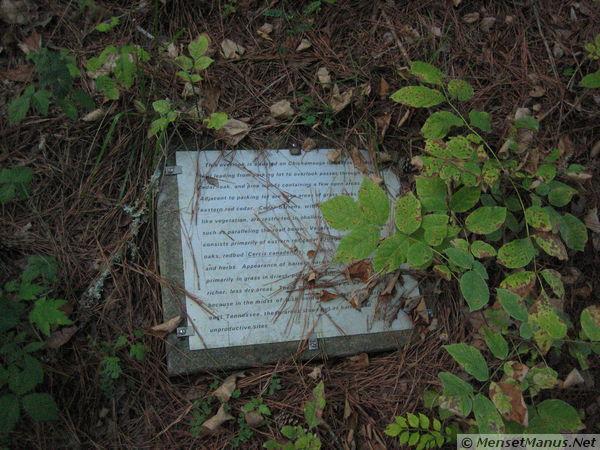
The building and displays at the overlook are gone, and
little remains, other than the foundation, which plants are
beginning to take over, and remnants of old display holders.
Approaching
the overlook, the new (
~2003-2005 archived 2007)
Visitor Center building complex comes into view.
The building and displays at the overlook are gone, and
little remains, other than the foundation, which plants are
beginning to take over, and remnants of old display holders. Near
the overlook, the old trail to the parking lot is blocked by a fallen
tree.
Near
the overlook, the old trail to the parking lot is blocked by a fallen
tree.